
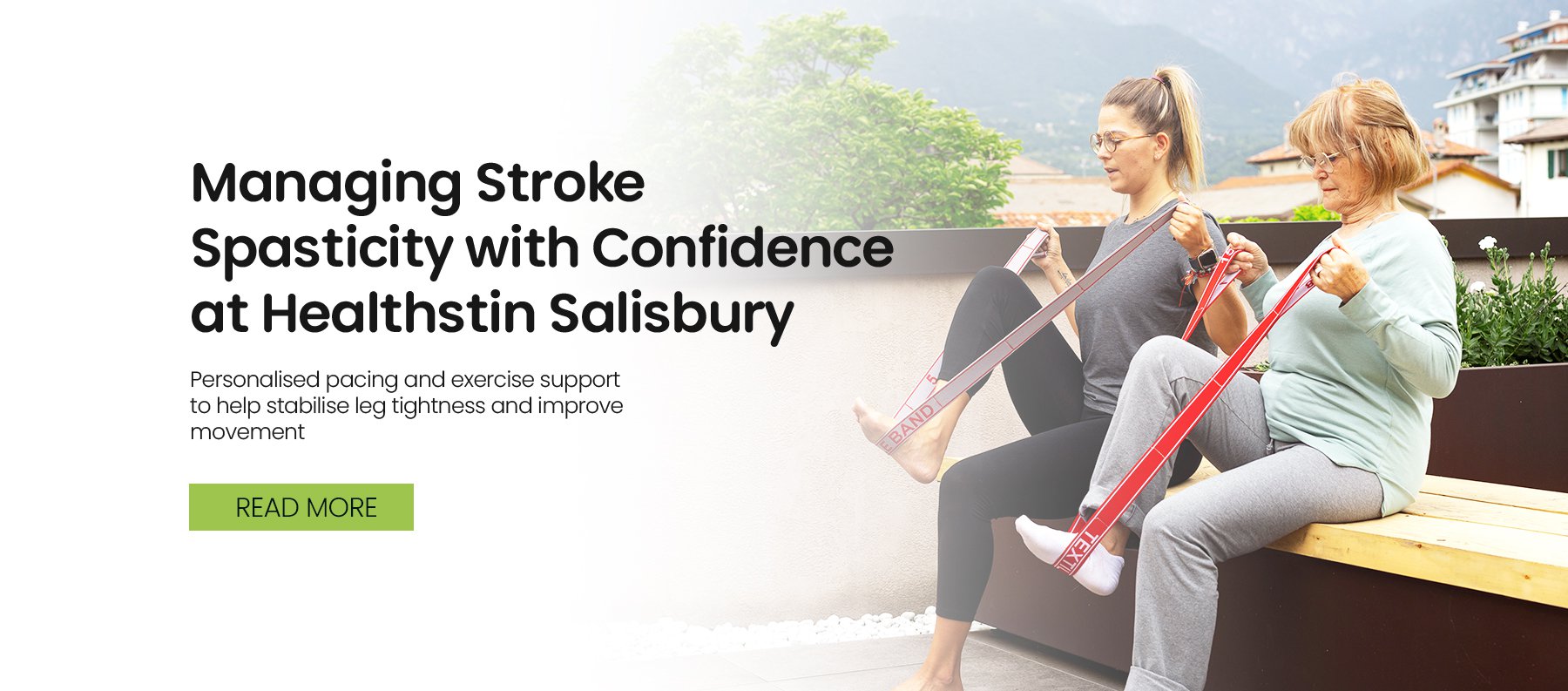
If you’re recovering from a stroke and noticing increased leg tightness, stiffness, or muscle spasms, it’s natural to feel concerned. Many people worry that this means their recovery is slipping backwards. The truth is more reassuring: changes in spasticity are common during stroke recovery, and with the right pacing and exercise support, they can often be stabilised and better managed.
At Healthstin Salisbury, we see stroke spasticity not as a setback, but as a sign of a nervous system that’s still healing and adapting. With the right neurological rehabilitation approach, you can continue moving forward with confidence.
Understanding Stroke Spasticity (and Why It Changes)
Spasticity is a common neurological condition after stroke, caused by disrupted communication between the brain and muscles. It often shows up as muscle tightness, stiffness, involuntary contractions, or difficulty controlling movement, particularly in the legs.
According to a systematic review by Zheng et al. (2021), around 25.3%-39.5% of people experience spasticity after a stroke, sometimes emerging months into recovery rather than immediately. Importantly, spasticity levels can fluctuate depending on factors such as fatigue, stress, activity load, illness, or the pacing of daily movement.
This means that feeling "worse" doesn't mean you're failing, it often means your nervous system is being asked to do more than it can currently tolerate.
Why Leg Spasticity Can Feel Worse During Recovery
Many people undergoing stroke recovery in Salisbury, notice leg tightness increases when they are:
– Doing too much activity without adequate rest
– Exercising without clear pacing strategies
– Managing stroke related fatigue
– Sitting for long periods without movement breaks
Research published in neurological rehabilitation literature shows that overloading the nervous system can temporarily increase muscle tone and spasticity, especially when fatigue is not well managed. This is where structured pacing and targeted exercise become essential.
How Pacing and Exercise Help Stabilise Spasticity
At Healthstin, our NDIS approved Exercise Physiology and Physiotherapy services in Salisbury, South Australia, often work together to address spasticity safely and effectively.
Evidence based strategies can include:
Graded strengthening and mobility exercises to improve muscle control without triggering excess tone
Pacing strategies for stroke fatigue, balancing activity and rest to protect the nervous system
Slow, controlled functional movements that retrain coordination rather than force flexibility
Positioning and movement breaks to reduce prolonged stiffness
Studies in post stroke rehabilitation show that regular, supervised physical therapy can reduce the severity and impact of spasticity whilst improving walking ability and daily function.
Why Local Neurological Rehabilitation in Salisbury Matters
Access to consistent, evidence informed care is critical for long term outcomes. As an NDIS registered provider in Salisbury, Healthstin offers:
– Individualised neurological rehabilitation programmes
– Collaboration between Exercise Physiologists and Physio Clinicians in Salisbury
– Support for NDIS participants, self managed and plan managed
– A clinic environment designed for neurological and physical therapy needs
For carers, teachers, and GPs, this means knowing there is a trusted physical therapy provider in Salisbury offering evidence based, person centred care close to home.
How Healthstin Salisbury Supports Stroke Recovery
Our team focuses on helping you move with confidence, not pushing through stiffness, but working with your nervous system.
We provide:
– Comprehensive neurological assessments
– Personalised exercise and pacing plans
– Ongoing monitoring and progression
– Education for clients, carers, and referrers
Whether you’re newly navigating spasticity or noticing changes months into recovery, our approach supports long term function and quality of life.
Take the Next Step with Confidence
If leg tightness or spasticity is affecting your recovery, support is available. You can call 1300 090 931 to speak directly with our Salisbury team, submit a Referral Form to help us coordinate care with your GP or support network, or book a FREE consultation to discuss personalised stroke rehabilitation options.
Stroke recovery is about moving safely, steadily, and with the right support in place. At Healthstin Salisbury, we’re here to walk that path with you, every step of the way.


